Remote how-to’s | Blog Post
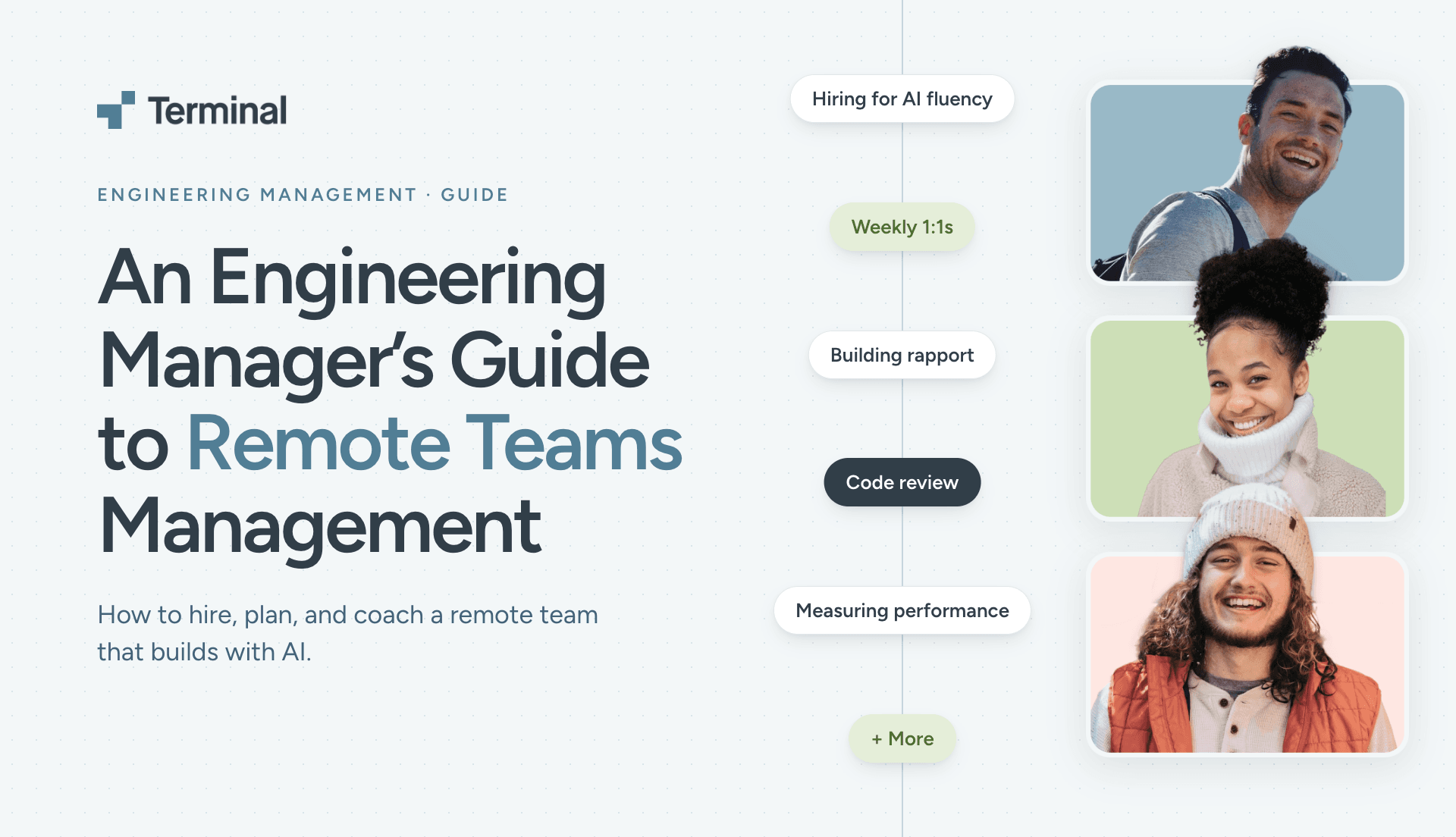
An Engineering Manager’s Guide to Remote Teams Management
Todd Adams
Share this post
AI has changed how remote engineering teams work, and engineering managers are the ones who have to make the new model run. Engineers adopted AI faster than most teams adapted around it. According to Terminal’s State of Remote Engineering report, 70.3% of engineers are AI Enabled or AI Native, and 84% say AI helps them ship significantly faster.
The speed comes with a cost. 42% of engineers feel more burned out than they did a year ago, and 95% plan to look for a new job in the next 12 months. Remote teams management is no longer about where your engineers sit. It is about how you hire, plan, and coach a team that ships faster, without burning it out.
That takes a remote teams management strategy built for AI-augmented teams. A guide to managing remote engineering teams covers how to build and run an AI-fluent remote engineering team, from hiring and onboarding to capacity planning, code review, and retention. Here’s a preview of what you’ll learn in the guide:
Building your remote engineering team
From new hire to pull request in days. Give every new hire an onboarding plan with a measurable 30-day outcome. The first shipped pull request is the clearest early signal that onboarding works.
How to hire for AI fluency. Stack match no longer predicts output. Add AI fluency to your interview rubric as a signal, not a checkbox. Terminal’s AI Fluency standard measures the mastery of AI code generation, agentic orchestration, and architectural governance, and classifies engineers as AI Assisted, AI Enabled, or AI Native. Keep people in the interview loop: according to Terminal’s State of Remote Engineering, 37% of engineers say an AI interviewer would make them less interested in the employer.
How to retain remote engineers from day one. Retention work starts the day the offer is signed. After pay, engineers weigh stability (67%), flexible hours (56%), career growth (55%), and benefits (54%). Hold quarterly career conversations tied to your leveling rubric, so growth is visible before an engineer starts looking. To check that your offers stay competitive, benchmark remote software engineer salaries by country.
“To me, being AI fluent means an engineer can use an agent to manage the full software development lifecycle, from planning to testing.” – Ja’dan Johnson, General Manager of Applied AI, Terminal AI
Running your remote engineering team
- How to plan capacity at the AI pace. AI-augmented engineers ship 2 to 3 times faster. Plan sprints and quarters at that pace. A refactor that used to take a quarter can now take a day, and you decide when that work is worth doing.
- How to staff code review. The bottleneck has moved. According to Terminal’s State of Remote Engineering, 70% of engineers now spend more time reviewing and validating code than writing it. Budget review time into every sprint, and keep pull requests small enough to review properly.
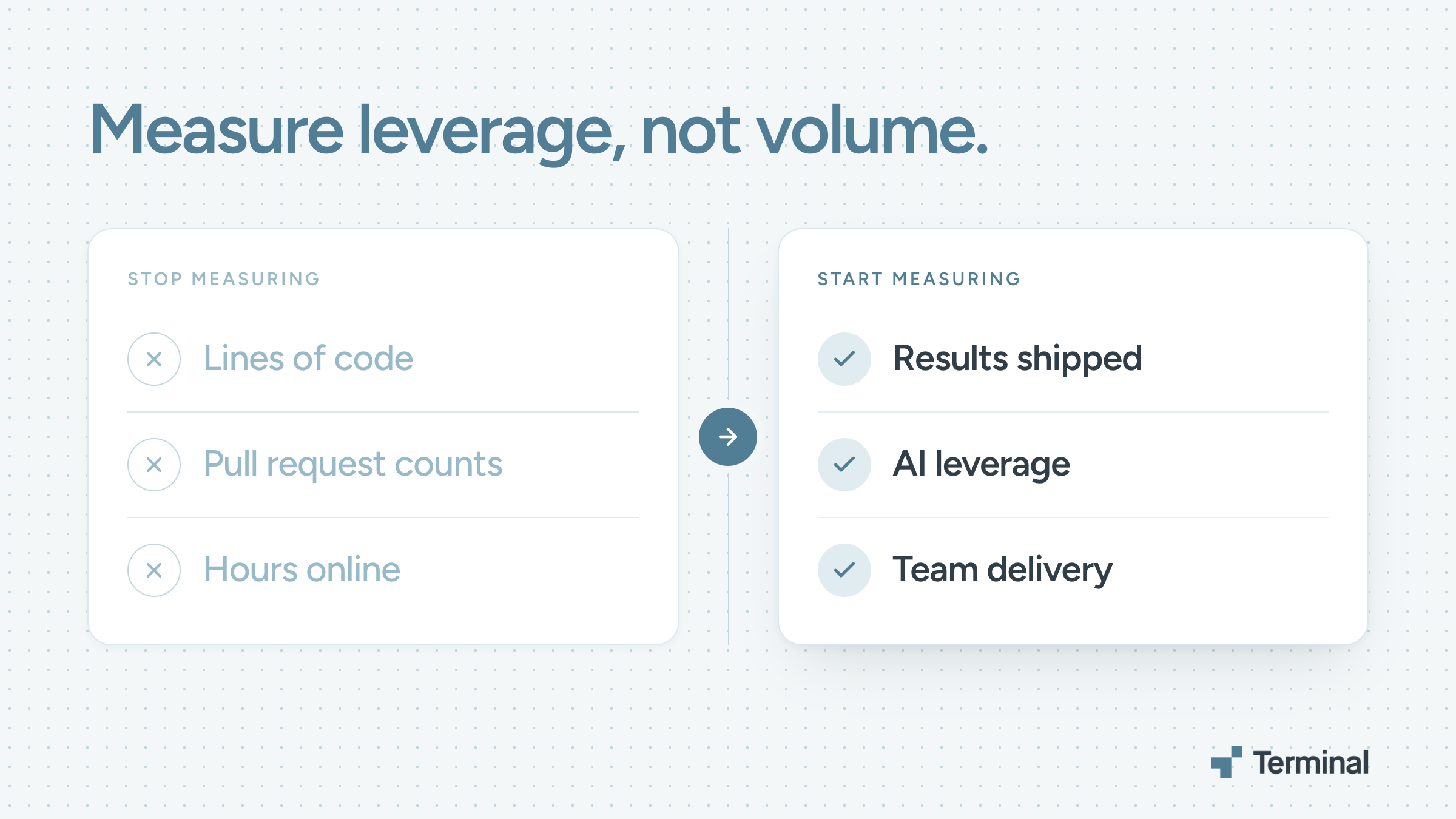
- How to measure performance by leverage. Lines of code and pull request counts no longer measure output. Evaluate how well each engineer uses AI tools to deliver results. Coach AI-resistant senior engineers into the new operating model instead of working around them.
- How to catch burnout early. Run weekly 1:1s and ask about workload directly: 57% of engineers say they are expected to do more work for the same pay. Let the engineer drive the agenda, surface blockers before they reach sprint reviews, and give feedback in the moment, not at the end of the cycle.
- How to run a remote team in writing. Most remote management happens in writing: 1:1 notes, performance docs, async updates, and roadmap memos. Size standups, retros, and planning to your team, and cut any meeting that no longer earns its place on the calendar.
“I keep to the 3-reply rule – if your conversation requires more than 3 replies on either side and you’re still not aligned, jump on a call! Sometimes a 5-minute huddle can save a lot of typed frustration.”
– Greg Villines, CPTO, Terminal
Get the guide to develop your remote teams management strategy
Leading an AI-augmented remote engineering team takes deliberate work. The skills this work builds, from planning at a new pace to staffing review and protecting your team’s time, make you a stronger manager, remote or in-office.
When you need to grow the team, Terminal hires AI-fluent engineers across Latin America, Canada, and Europe, in time zones aligned with North American business hours. Only the top 7% of candidates pass Terminal’s screening. Candidates reach you within 48 hours of kickoff, and teams hire 40% faster than with domestic recruiting.
Are you an engineering manager leading a remote team? Download the guide for the full playbook. Ready to grow your team? Hire AI-fluent engineers with Terminal.